
The digital storefront of 2026 is no longer a static catalog; it is a high-performance engine of personalized experiences. For business owners, CTOs, and founders across the USA, UK, and India, the stakes have shifted. Speed and mobile responsiveness are no longer “features”-they are the bare minimum for entry. Today, the challenge lies in navigating a fragmented landscape of headless architectures, hyper-localization, and the rising cost of customer acquisition.
Building an eCommerce platform that converts requires a departure from “template thinking.” Whether you are a bootstrapped startup in Delhi or an enterprise-level retailer in London, your development strategy must balance technical agility with a relentless focus on the end-user’s psychological journey. This guide moves past the basics to explore the high-level strategies defining the next era of online retail.
Embracing Headless Commerce for Ultimate Agility
In 2026, the traditional “all-in-one” monolithic platform is becoming a bottleneck for scaling brands. Headless commerce-decoupling the frontend presentation layer from the backend logic-is the strategic gold standard.
By using APIs to deliver content to any device, brands are no longer tethered to the design constraints of their CMS. This allows a website development company to build lightning-fast interfaces using frameworks like Next.js or Remix while keeping the robust checkout logic of Shopify Plus, BigCommerce, or a custom-built engine.
Strategic Insight: For CTOs, headless isn’t just about aesthetics; it’s about “future-proofing.” When a new sales channel emerges (like smart mirrors or advanced voice commerce), you don’t need to rebuild your entire store. You simply plug in a new “head.”
The “Mobile-First” Fallacy: Transitioning to Mobile-Only
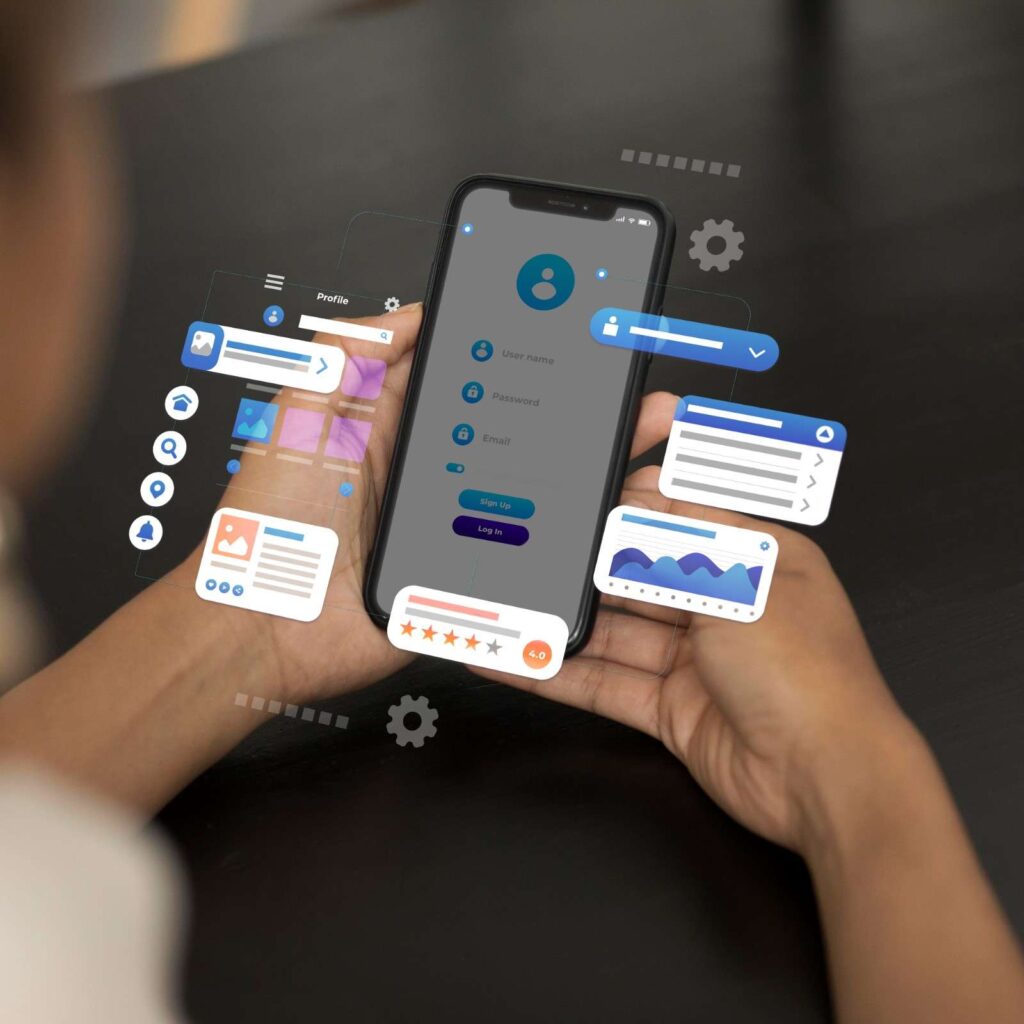
We’ve talked about mobile-friendliness for a decade. In 2026, the strategy has evolved into ecommerce mobile app development as a primary driver, rather than a secondary thought. Progressive Web Apps (PWAs) have bridged the gap, offering the “app-like” feel-offline access, push notifications, and high-speed loading-without the friction of a download.
In markets like India, where mobile-first is the reality for the majority of the population, optimizing for low-latency performance on 5G networks is critical. Your development team should prioritize “Thumb-Driven Design,” ensuring every critical action, from filtering to checkout, is achievable with a single hand.
Localization vs. Globalization: The Multi-Currency Mindset
For a brand sitting in the UK looking to capture the Indian or US market, a one-size-fits-all website is a conversion killer. Modern eCommerce website development must bake localization into the architecture.
This goes beyond Google Translate. It involves:
- Dynamic Pricing: Displaying costs in local currency with real-time exchange rates.
- Hyper-Local Logistics: Integrating with region-specific last-mile delivery partners.
- Cultural UX: Recognizing that a “Buy Now” button might perform differently than “Add to Bag” depending on regional shopping habits.
- Compliance: Ensuring GDPR compliance in the UK/EU while adhering to the Digital Personal Data Protection (DPDP) Act in India.
Hyper-Personalization Through Data-Driven Architecture
The most successful eCommerce sites in 2026 treat every visitor as a segment of one. This is achieved by integrating the website with a robust Customer Data Platform (CDP).
Instead of showing generic “Recommended for You” sections, your site should dynamically restructure its homepage based on the user’s past behavior, weather patterns in their location, or even their referral source. If a user lands on your site via a “Sustainable Fashion” ad, the entire UI should pivot to highlight eco-friendly certifications and materials immediately.
Decoding eCommerce Website Development Cost in India
For many global enterprises, India remains the premier hub for high-quality engineering. However, the conversation around ecommerce website development cost in India has shifted from “the cheapest option” to “the best value for complexity.”
While a basic WordPress/WooCommerce setup might range from $1,500 to $4,000, an enterprise-grade, headless eCommerce build typically ranges from $15,000 to $60,000+, depending on the integrations.
| Feature Set | Estimated Cost (USD) | Estimated Cost (INR) |
| Custom Mid-Market Store | $10,000 – $25,000 | ₹8L – ₹20L |
| Enterprise Headless Build | $40,000 – $80,000+ | ₹33L – ₹65L+ |
| Mobile App Integration | $15,000 – $35,000 | ₹12L – ₹29L |
Working with a website development agency in India allows for a larger team of specialists-UI/UX designers, QA engineers, and DevOps experts-at a fraction of the cost of a comparable US-based team, without sacrificing the technical sophistication required for 2026.
Zero-Friction Checkout and “Invisible” Payments
Cart abandonment remains the industry’s $18 billion problem. The strategy for 2026 is the “Invisible Checkout.” This includes the integration of biometric authentication (FaceID/TouchID) and one-click payment gateways like Apple Pay, Google Pay, and UPI in India.
Every additional field in a checkout form reduces the conversion rate by approximately 10%. Your development strategy should include “guest checkout” by default and use address auto-complete APIs to minimize typing.
Performance Engineering: The 1-Second Rule
In 2026, a 100ms delay in load time can correlate to a 7% drop in conversions. Website development is now a game of performance engineering.
Strategies like Edge Computing (running logic closer to the user) and Image Optimization (using WebP or AVIF formats) are mandatory. Your agency should be obsessed with Core Web Vitals-specifically Largest Contentful Paint (LCP) and Interaction to Next Paint (INP). A “pretty” site that is slow is a failed investment.
Real-World Use Case: The D2C Pivot
A UK-based premium skincare brand was struggling with a 70% cart abandonment rate on their legacy Magento store. They partnered with a website development company to transition to a headless Shopify architecture. By implementing a PWA and localizing the checkout for their growing Indian customer base (integrating UPI payments), they saw a 45% increase in mobile conversions and a 30% reduction in page load times within three months.
Overcoming Modern Development Challenges
- The Challenge: Data Privacy & Security. With the rise of sophisticated cyber-attacks, protecting customer payment data is harder than ever.
- The Solution: Move toward a “Zero Trust” architecture and rely on PCI-compliant third-party processors. Never store sensitive card data on your own servers.
- The Challenge: Rapidly Changing Tech Stacks.
- The Solution: Avoid “shiny object syndrome.” Choose technologies with strong community support (like React or Vue) to ensure you can find talent to maintain the site in three years.
Key Takeaways for 2026
- Prioritize Speed Over Everything: Your SEO and UX depend entirely on performance metrics.
- Go Headless for Scale: Decouple your frontend to allow for rapid design pivots without breaking your backend.
- Invest in Mobile: If your mobile experience isn’t superior to your desktop experience, you are losing more than half your potential revenue.
- Localize the Experience: Use regional currency, payments, and language to build trust in international markets.
- Focus on Value, Not Just Cost: When looking at ecommerce website development cost in India, prioritize agencies with proven portfolios in complex integrations over the lowest bidder.
FAQs
- How long does it take to develop a custom eCommerce website?
A custom, mid-to-enterprise level eCommerce site typically takes 3 to 6 months. This includes discovery, UI/UX design, development, rigorous testing, and deployment.
- Which platform is best for eCommerce in 2026?
There is no “best” platform, only the right fit. Shopify is excellent for rapid scaling; BigCommerce excels in multi-channel retail; and custom-built MERN stack solutions are best for unique, high-complexity business models.
- Why should I choose an agency in India for website development?
India offers a unique combination of high-level technical expertise, English proficiency, and cost-efficiency. It allows businesses in the US and UK to access senior-level talent and 24/7 development cycles.
- Is a mobile app necessary if I have a responsive website?
While a responsive site is mandatory, an app offers better retention through push notifications and a more seamless checkout experience. For brands with high repeat-purchase rates, an app is a strategic necessity.
- How do I improve my site’s Google ranking in 2026?
Focus on “Experience” and “Authoritativeness.” Google’s algorithms now heavily favor sites with fast load times (Core Web Vitals), high-quality unique content, and flawless mobile usability.
Building for the Future
The landscape of eCommerce website development is moving toward a more open, fast, and user-centric ecosystem. Winning in 2026 requires more than just a functional site; it requires a digital experience that understands the nuances of global commerce and the technical demands of a modern audience.
At Mindaptix, we specialize in bridging the gap between complex engineering and intuitive user experiences. Whether you are looking to migrate to a headless architecture or launch a high-performance mobile app, our team provides the strategic oversight and technical execution needed to dominate your niche.
Ready to redefine your digital storefront? Contact Mindaptix today for a comprehensive audit of your eCommerce strategy.