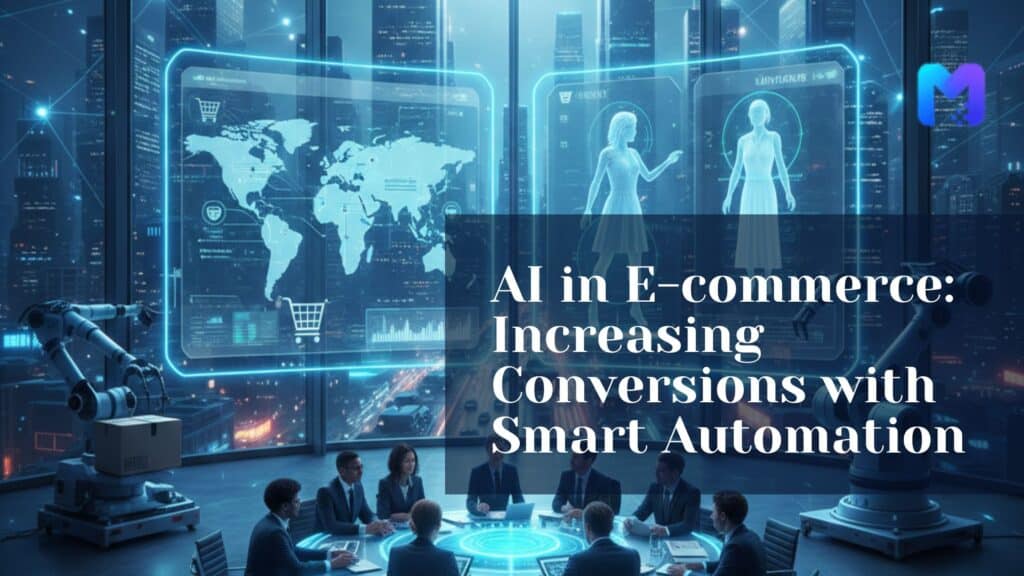
AI automation increasing e-commerce conversions and revenue
If you run an e-commerce business, you already know something most people don’t talk about publicly: Getting traffic is easier than turning that traffic into paying customers. You can run ads, post on social media and hire influencers. But if your conversion rate stays stuck at 1–2%, you’re basically pouring water into a leaking bucket. This is where AI starts to matter – not as a trend, not as a flashy feature, but as a quiet system working in the background to reduce friction and guide buying decisions. But here’s the important part: AI only improves conversions when it’s tied to a real business problem. Otherwise, it just becomes expensive decoration. Let’s talk about what actually works. The Real Problem in E-commerce Most store owners assume people leave because of pricing. Sometimes that’s true. But often, the real reasons are: Shoppers can’t find what they want quickly. The checkout process feels confusing. Product suggestions feel irrelevant. Support questions go unanswered. Trust feels low. These aren’t marketing problems. They’re experience problems. And experience is where smart automation changes the game. Smarter Product Recommendations (Not Random Suggestions) Have you ever noticed how some stores “just know” what you want? That’s not luck. It’s behavioral tracking and pattern recognition. When someone visits your store, clicks three products, compares two categories, and checks reviews – that behavior tells a story. AI reads that story. Instead of showing generic “featured products,” it shows items that align with browsing patterns. For businesses working with an experienced ecommerce mobile app development company, this kind of personalization is becoming standard – not luxury. And the impact is measurable: Higher average order value Increased repeat purchases More time spent in-app That directly improves revenue without increasing ad spend. Search That Thinks Like a Customer Here’s something simple but powerful: If your search bar doesn’t understand what people mean, you lose sales. Customers type incomplete phrases. They misspell words. They search casually. A basic search engine only matches keywords. AI-based search understands intent. If someone types “budget summer sneakers,” the system should filter price range, style, and category automatically – even if those exact words aren’t in the product title. When businesses invest in proper mobile app development, this feature should be discussed early. Because better search equals faster decisions – and faster decisions increase conversions. Cart Abandonment Is Not Random Cart abandonment isn’t always about price. Sometimes people hesitate because they’re unsure. Maybe they’re: Comparing options Unsure about shipping Waiting for payday Checking competitor sites AI systems track that behavior and respond intelligently. Instead of sending the same “You forgot something” email to everyone, automation can: Offer a small discount to high-intent users Remind returning customers differently Highlight limited stock Adjust messaging tone This is where smart systems outperform generic marketing automation. Mobile Apps + AI = Stronger Conversions Websites are important. But mobile apps create stronger engagement. Why? Because apps allow: Personalized push notifications Stored preferences Faster checkout Loyalty program integration When you work with a strong ecommerce mobile app development company, AI isn’t just layered on top. It’s built into the structure. For example: If a customer views a product twice but doesn’t buy, the app can trigger a push notification within 24 hours. Not randomly – strategically. This kind of automation increases return visits and conversions without aggressive advertising. If you’re evaluating the best app development company in USA or globally, ask them how they integrate behavior-driven automation. That’s what separates average apps from high-performing ones. AI and Pricing Strategy Pricing decisions are emotional for founders. Lowering prices feels risky. Raising them feels risky. AI doesn’t guess. It studies patterns. It can analyze: Demand spikes Seasonal trends Inventory levels Competitor movement Then suggest dynamic pricing within your rules. This doesn’t mean constant price changes. It means intelligent adjustments that protect margins while staying competitive. For businesses concerned about ecommerce mobile app development cost, this feature alone can recover investment faster than expected. Fraud Prevention Builds Trust Conversions don’t happen if customers feel unsafe. AI-powered fraud detection systems monitor transactions in real time. They flag suspicious activity before it becomes a chargeback disaster. That protection builds trust – and trust increases repeat purchases. Many software development outsourcing companies now integrate fraud systems into payment infrastructure from the start instead of treating it as an add-on. Security isn’t flashy. But it protects revenue. Inventory Prediction: The Hidden Conversion Booster Running out of stock during peak demand kills momentum. Overstocking ties up cash flow. AI helps forecast demand based on historical data and buying patterns. When products are available exactly when customers want them, conversion rates naturally improve. This is less visible than chatbots or recommendations – but often more powerful. Let’s Talk About Cost Honestly AI integration does increase development complexity. It requires: Data collection systems Backend architecture Ongoing optimization Skilled technical teams If you’re already reviewing ecommerce mobile app development cost, you need to think long-term. Because the right automation increases: Conversion rate Customer lifetime value Operational efficiency That’s where the real return appears. Smart founders don’t ask, “How cheap can we build this?” They ask, “How much revenue lift can this generate over 18 months?” That mindset changes everything. Common Mistakes I’ve Seen Over the years, I’ve seen businesses make the same mistakes: Adding too many AI tools without integration Ignoring data accuracy Expecting instant results Copying competitor features blindly Automation works when it’s aligned with real customer behavior – not trends. Partnering with experienced teams offering software product development services ensures systems are connected properly from the beginning. Disconnected tools create confusion. Integrated systems create growth. So, When Does AI Truly Increase Conversions? When it: Reduces decision time Personalizes recommendations Removes friction at checkout Sends timely reminders Improves trust Not when it’s used as a marketing buzzword. The strongest e-commerce brands don’t talk about AI constantly. They quietly use it to make buying easier. And when buying feels easier, people buy more. That’s it. Not magic. Not hype. Just smarter systems supporting human decisions.
AI automation increasing e-commerce conversions and revenue Read More »