
MindAptix | AI-Powered Development Agency

Uncover proof of MindAptix impact across 3000 + digital deliveries for 35+ industries. EXPLORE NOW! Uncover proof of MindAptix impact across 3000+ digital deliveries for 35+ industries. EXPLORE NOW!
Uncover proof of MindAptix impact across 3000+ digital deliveries for 35+ industries. EXPLORE NOW! Uncover proof of MindAptix impact across 3000+ digital deliveries for 35+ industries. EXPLORE NOW!

March 2026

Mobile App Development Guide: Key Trends and Best Practices for 2026

Best eCommerce Website Development Strategies in 2026

The digital storefront of 2026 is no longer a static catalog; it is a high-performance engine of personalized experiences. For business owners, CTOs, and founders across the USA, UK, and India, the stakes have shifted. Speed and mobile responsiveness are no longer “features”-they are the bare minimum for entry. Today, the challenge lies in navigating a fragmented landscape of headless architectures, hyper-localization, and the rising cost of customer acquisition. Building an eCommerce platform that converts requires a departure from “template thinking.” Whether you are a bootstrapped startup in Delhi or an enterprise-level retailer in London, your development strategy must balance technical agility with a relentless focus on the end-user’s psychological journey. This guide moves past the basics to explore the high-level strategies defining the next era of online retail. Embracing Headless Commerce for Ultimate Agility In 2026, the traditional “all-in-one” monolithic platform is becoming a bottleneck for scaling brands. Headless commerce-decoupling the frontend presentation layer from the backend logic-is the strategic gold standard. By using APIs to deliver content to any device, brands are no longer tethered to the design constraints of their CMS. This allows a website development company to build lightning-fast interfaces using frameworks like Next.js or Remix while keeping the robust checkout logic of Shopify Plus, BigCommerce, or a custom-built engine. Strategic Insight: For CTOs, headless isn’t just about aesthetics; it’s about “future-proofing.” When a new sales channel emerges (like smart mirrors or advanced voice commerce), you don’t need to rebuild your entire store. You simply plug in a new “head.” The “Mobile-First” Fallacy: Transitioning to Mobile-Only We’ve talked about mobile-friendliness for a decade. In 2026, the strategy has evolved into ecommerce mobile app development as a primary driver, rather than a secondary thought. Progressive Web Apps (PWAs) have bridged the gap, offering the “app-like” feel-offline access, push notifications, and high-speed loading-without the friction of a download. In markets like India, where mobile-first is the reality for the majority of the population, optimizing for low-latency performance on 5G networks is critical. Your development team should prioritize “Thumb-Driven Design,” ensuring every critical action, from filtering to checkout, is achievable with a single hand. Localization vs. Globalization: The Multi-Currency Mindset For a brand sitting in the UK looking to capture the Indian or US market, a one-size-fits-all website is a conversion killer. Modern eCommerce website development must bake localization into the architecture. This goes beyond Google Translate. It involves: Dynamic Pricing: Displaying costs in local currency with real-time exchange rates. Hyper-Local Logistics: Integrating with region-specific last-mile delivery partners. Cultural UX: Recognizing that a “Buy Now” button might perform differently than “Add to Bag” depending on regional shopping habits. Compliance: Ensuring GDPR compliance in the UK/EU while adhering to the Digital Personal Data Protection (DPDP) Act in India. Hyper-Personalization Through Data-Driven Architecture The most successful eCommerce sites in 2026 treat every visitor as a segment of one. This is achieved by integrating the website with a robust Customer Data Platform (CDP). Instead of showing generic “Recommended for You” sections, your site should dynamically restructure its homepage based on the user’s past behavior, weather patterns in their location, or even their referral source. If a user lands on your site via a “Sustainable Fashion” ad, the entire UI should pivot to highlight eco-friendly certifications and materials immediately. Decoding eCommerce Website Development Cost in India For many global enterprises, India remains the premier hub for high-quality engineering. However, the conversation around ecommerce website development cost in India has shifted from “the cheapest option” to “the best value for complexity.” While a basic WordPress/WooCommerce setup might range from $1,500 to $4,000, an enterprise-grade, headless eCommerce build typically ranges from $15,000 to $60,000+, depending on the integrations. Feature Set Estimated Cost (USD) Estimated Cost (INR) Custom Mid-Market Store $10,000 – $25,000 ₹8L – ₹20L Enterprise Headless Build $40,000 – $80,000+ ₹33L – ₹65L+ Mobile App Integration $15,000 – $35,000 ₹12L – ₹29L Working with a website development agency in India allows for a larger team of specialists-UI/UX designers, QA engineers, and DevOps experts-at a fraction of the cost of a comparable US-based team, without sacrificing the technical sophistication required for 2026. Zero-Friction Checkout and “Invisible” Payments Cart abandonment remains the industry’s $18 billion problem. The strategy for 2026 is the “Invisible Checkout.” This includes the integration of biometric authentication (FaceID/TouchID) and one-click payment gateways like Apple Pay, Google Pay, and UPI in India. Every additional field in a checkout form reduces the conversion rate by approximately 10%. Your development strategy should include “guest checkout” by default and use address auto-complete APIs to minimize typing. Performance Engineering: The 1-Second Rule In 2026, a 100ms delay in load time can correlate to a 7% drop in conversions. Website development is now a game of performance engineering. Strategies like Edge Computing (running logic closer to the user) and Image Optimization (using WebP or AVIF formats) are mandatory. Your agency should be obsessed with Core Web Vitals-specifically Largest Contentful Paint (LCP) and Interaction to Next Paint (INP). A “pretty” site that is slow is a failed investment.   Real-World Use Case: The D2C Pivot A UK-based premium skincare brand was struggling with a 70% cart abandonment rate on their legacy Magento store. They partnered with a website development company to transition to a headless Shopify architecture. By implementing a PWA and localizing the checkout for their growing Indian customer base (integrating UPI payments), they saw a 45% increase in mobile conversions and a 30% reduction in page load times within three months.   Overcoming Modern Development Challenges The Challenge: Data Privacy & Security. With the rise of sophisticated cyber-attacks, protecting customer payment data is harder than ever. The Solution: Move toward a “Zero Trust” architecture and rely on PCI-compliant third-party processors. Never store sensitive card data on your own servers. The Challenge: Rapidly Changing Tech Stacks. The Solution: Avoid “shiny object syndrome.” Choose technologies with strong community support (like React or Vue) to ensure you can find talent to maintain the site in three years.   Key

Best eCommerce Website Development Strategies in 2026 Read More »

What Types of Websites

What Types of Websites Can You Build With WordPress and AI?

The global business landscape-from the tech hubs of London and San Francisco to the burgeoning markets of Bangalore-has moved past the era of static web design. Today, a website is a living, breathing operational tool. For CTOs and founders, the primary objective is no longer just “having an online presence,” but achieving high-performance website development that integrates Artificial Intelligence to automate complex workflows. When we look at the most successful digital platforms in 2024, they share a common DNA: they leverage the flexibility of WordPress as a CMS and the cognitive power of AI to serve specific industry needs. Whether you are navigating the complexities of patient data or managing a global supply chain, the synergy of these technologies is the new gold standard. 1. Intelligence-Driven E-commerce Website Development The “Standard” online store is no longer enough to maintain a competitive edge. Modern E-commerce website development now focuses on predictive intelligence. By integrating WooCommerce with AI-driven recommendation engines, businesses are moving away from static product grids. Imagine a high-traffic retail site where the homepage rearranges itself based on the user’s past browsing behavior or local weather patterns. AI models can now analyze cart data in real-time to offer “Smart Upsells” that a customer is statistically likely to need. For enterprise-level stores, AI-driven inventory management can predict stockouts before they happen, ensuring your WordPress site remains a reliable revenue engine.   2. Secure and Scalable Healthcare Website Development In the medical sector, trust and data integrity are the highest currencies. Healthcare website development on WordPress has evolved to handle much more than just appointment bookings. By utilizing HIPAA-compliant integrations and AI, healthcare providers can now offer “Symptom Checkers” that guide patients to the right specialist without human intervention. AI-powered chatbots can handle routine queries-such as prescription refills or insurance verification-allowing medical staff to focus on critical care. For clinics in the UK (NHS-aligned) or private practices in the US, this automation reduces administrative overhead while maintaining a 24/7 patient touchpoint.   3. Real Estate Website Development: The Virtual Concierge The property market thrives on visual engagement and instant information. Modern Real Estate website development is moving beyond simple zip code filters. Strategic firms are now implementing AI-driven “Visual Search” on their WordPress sites. A user can upload a photo of a kitchen style they like, and the AI scans the property database to find listings with similar architectural features. Additionally, AI-driven valuation tools can provide instant, data-backed estimates to homeowners, turning a search tool into a high-end lead generation machine for agents in competitive markets like Dubai, Mumbai, or New York.   4. Precision-Focused Construction Website Development For the AEC (Architecture, Engineering, and Construction) industry, a website must act as a project management bridge. Construction website development today often involves integrating WordPress with AI-powered project dashboards. These platforms can provide real-time updates on build progress using AI to analyze site photos and flag potential delays. For large-scale developers in India or the UK, a WordPress portal can serve as a secure environment where subcontractors upload documents, and AI automatically categorizes them, checks for compliance, and alerts project managers of missing certifications. 5. Travel Website Development: Personalizing the Journey The travel industry is built on aspiration and logistics. Travel website development is now leveraging AI to create “Hyper-Personalized Itineraries.” Instead of showing a generic list of hotels, a WordPress-based travel portal can use AI to analyze a user’s social preferences and budget to curate a 10-day trip in seconds. For travel agencies, this means higher conversion rates as the “search-to-book” friction is eliminated. AI also handles multi-currency and multi-language support effortlessly, which is essential for global platforms serving diverse travelers.   6. Multi-Regional Enterprise Portals For global organizations, managing a website that serves the USA, UK, and India simultaneously is a logistical challenge. WordPress, combined with AI-driven neural translation (like DeepL) and localized SEO logic, allows for “Human-in-the-Loop” localization. The AI handles the bulk of the technical translation and regional keyword optimization, while your local teams provide the final cultural polish.   Real-World Use Case: The “Smart” Industrial Hub Consider a mid-sized construction firm. Traditionally, their site was a gallery of past projects. By pivoting to an AI-integrated WordPress platform, they implemented a client portal where AI monitors supply chain costs in real-time. When material prices fluctuate beyond a certain percentage, the site automatically alerts the procurement team. This isn’t just a website; it’s a business intelligence tool.   Navigating the Challenges: Ethics and Security While the potential is vast, integrating AI into these industries requires a disciplined approach. The Data Privacy Barrier: Especially in Healthcare and E-commerce, data privacy (GDPR/CCPA) is non-negotiable. The Solution: Use “Private AI” instances that do not train their models on your proprietary customer data. Performance: Excessive AI scripts can slow down a site. The Solution: Offload AI processing to the server-side or use headless WordPress architecture to keep the frontend lightning-fast. Key Takeaways for Decision-Makers Vertical-Specific AI: Don’t just “add AI.” Build features that solve specific industry pain points (e.g., symptom checkers for healthcare). Data is Your Fuel: Your WordPress site’s AI is only as good as the data it accesses. Ensure your CRM and inventory data are clean. Hybrid Efficiency: Use AI for scale and speed, but maintain human oversight for brand voice and high-stakes clinical or legal content. SEO Evolution: AI helps you move from “Keyword Matching” to “Intent Matching,” which is vital for modern Google rankings. Operational ROI: The goal of AI integration is to reduce manual labor-from customer service to data entry-freeing your team for high-value tasks. Frequently Asked Questions Is WordPress secure enough for Healthcare website development? | Yes, provided it is configured correctly. By using managed enterprise hosting, data encryption, and HIPAA-compliant API bridges, WordPress is a highly secure foundation for medical platforms. Can AI help with SEO for E-commerce website development? Absolutely. AI can automate the generation of unique meta descriptions for thousands of products and optimize internal linking structures based on how users actually search, significantly boosting

What Types of Websites Can You Build With WordPress and AI? Read More »

Website Development Cost

How Much Does WordPress Website Development Cost in India? (2026 Guide)

When you sit down to budget for a digital presence in 2026, the question isn’t just “how much does a website cost?” but rather, “what kind of ROI can my WordPress ecosystem generate?” For business owners in the USA, UK, and India, the Indian development market remains the global gold standard for balancing technical sophistication with cost-efficiency. However, the “cheap labor” narrative of the past decade has evolved. Today, India is a hub for high-end WordPress architecture, headless CMS integrations, and performance-first engineering. If you are looking to hire website developers in India, you aren’t just looking for someone to install a theme; you are looking for a technical partner who understands global web standards. In this guide, we’ll peel back the layers of pricing, from simple business sites to high-intensity ecommerce engines, helping you navigate the 2026 market with clarity. Why WordPress remains the Enterprise Choice in 2026 Despite the rise of proprietary site builders, WordPress continues to power over 40% of the web. Why? Because of its “no-ceiling” scalability. In 2026, we see a massive shift toward Headless WordPress-where WordPress handles the backend content while modern frameworks like Next.js or React handle the frontend. For a startup founder or a CTO, this means you get the ease of content management with the lightning-fast speeds required for modern SEO. When calculating website development costs, you must factor in whether you need a traditional monolithic build or a future-proof decoupled architecture. Breaking Down the Cost Tiers: From MVP to Enterprise The cost of website development in India is rarely a flat fee. It is a reflection of the hours required for discovery, design, coding, and QA. The “Foundational” Business Site ($1,500 – $3,500): This is ideal for professional service firms (consultants, lawyers, local agencies). It typically involves a customized premium theme, 10–15 pages, basic SEO setup, and lead generation forms. The “Growth” Mid-Market Site ($4,000 – $8,500): For established SMEs, this tier includes custom UI/UX design (no templates), third-party API integrations (CRM, Email Marketing), and advanced security protocols. The Enterprise/Headless Build ($10,000+): For large-scale corporations, this involves multisite management, custom Gutenberg blocks, high-level animations, and rigorous performance optimization for millions of visitors. Ecommerce Website Development Cost in India: The WooCommerce Factor If you’re launching an online store, ecommerce website development cost is a different beast entirely. You aren’t just building a site; you’re building a transaction engine. In India, a robust WooCommerce setup usually starts around $3,000 for a basic shop and can scale to $20,000+ for complex marketplaces. Inventory Management: Syncing your site with ERPs or warehouse software. Payment Gateways: Integration with Stripe, PayPal, or Razorpay, ensuring PCI compliance. User Experience: Custom product builders, advanced filtering, and one-click checkouts. Investing in a high-quality website development agency ensures that your checkout flow is frictionless-a 1% increase in conversion rate often pays for the entire development cost within months. Why “Cheap” is Often the Most Expensive Option There is a temptation to hire freelancers at bottom-dollar rates. We’ve seen many clients come to us after a $500 project went south. The hidden costs of “cheap” development include: Technical Debt: Poorly written code that breaks when WordPress updates. Security Vulnerabilities: Using nulled plugins or “cracked” themes. Poor Communication: Missing the nuance of your brand voice or business goals. When you hire website developers in India through a reputable firm, you are paying for a Project Manager, a QA Tester, and a Lead Architect-not just a coder. This “agency-grade” approach prevents the $5,000 mistake of having to build the same website twice. Strategic Insights: The Shift to Performance and Accessibility In 2026, Google’s Core Web Vitals and global accessibility laws (like the ADA or European Accessibility Act) are non-negotiable. A high-tier website development company in India now includes accessibility audits and performance optimization as standard practice. If your site takes more than 2 seconds to load on a 4G connection in London or New York, you are losing money. Indian agencies have pivoted to “Performance-First” development, utilizing server-side rendering and advanced caching layers to ensure global speed. Real-World Scenario: The Mid-Size SaaS Rebrand Consider a UK-based SaaS company that needed to move from a bloated, slow site to a modern, lead-gen powerhouse. The Problem: High bounce rates and impossible-to-edit pages. The Solution: A custom WordPress build with a bespoke block editor. The Investment: ~$7,500. The Result: A 40% increase in mobile inquiries and a backend that the marketing team could actually use without calling a developer every time they wanted to change a headline. Challenges in 2026 and How to Solve Them Challenge: Plugin Overload. Many developers over-rely on plugins, which slows down the site. Solution: Demand custom-coded functionality for core features. Challenge: Time Zone Differences. * Solution: Professional Indian agencies now operate on “overlap hours,” ensuring at least 3–4 hours of synchronous communication with US/UK clients. Challenge: Maintenance. WordPress is not a “set it and forget it” platform. Solution: Budget for a monthly maintenance retainer (usually $100–$300) for security patches and backups. Key Takeaways for Decision-Makers Value over Price: Focus on the total cost of ownership (TCO) rather than the initial quote. Custom is King: In 2026, templates are for hobbies; custom builds are for businesses. Mobile-First is Mandatory: Ensure your developer prioritizes “thumb-friendly” design. Integrations Matter: Your website should talk to your CRM, ERP, and marketing tools. India’s Talent Maturity: India now offers world-class UI/UX design, not just backend coding. FAQs Q1: Why is there such a huge gap in WordPress quotes? Quotes vary based on the level of customization. A “theme setup” is fast and cheap, while a “custom-coded architecture” requires hundreds of man-hours from senior designers and engineers. Q2: Is WooCommerce better than Shopify for Indian development? WooCommerce offers total ownership and lower long-term monthly fees. In India, the talent pool for custom WooCommerce development is deep, making it more cost-effective for complex, custom requirements. Q3: How long does a typical WordPress project take in India? A standard professional site takes 6–8 weeks. Complex ecommerce or enterprise sites

How Much Does WordPress Website Development Cost in India? (2026 Guide) Read More »

Mobile App Development

Mobile App Development Guide: Key Trends and Best Practices for 2026

The “app for everything” era has matured into something far more complex. If 2023 was about the sudden explosion of Generative AI, 2026 is the year of integration and invisible friction. For CTOs, startup founders, and enterprise leaders in the USA, UK, and India, the challenge isn’t just “building an app”-it’s about creating a high-performance digital ecosystem that survives a saturated market. In this guide, we’re moving past the surface-level advice. We are looking at the architectural shifts, the changing definition of “user experience,” and the strategic moves that separate market leaders from those buried in the app store graveyard. 1. The Death of the “Grafted-On” AI Feature Two years ago, companies rushed to add a basic chatbot to their interface and called it an “AI-powered” app. In 2026, that approach is a liability. Today’s leading mobile app development focuses on “AI-First” architecture. This means the AI isn’t a feature; it’s the engine. We are seeing a massive shift toward AI software development services that prioritize on-device processing. Why? Because privacy-conscious users in the UK and USA, and data-sensitive enterprises in India, want speed without sending every byte of data to the cloud. If you are building today, your roadmap must include Large Action Models (LAMs) that don’t just answer questions but execute tasks across the OS-like booking a flight or reconciling an invoice-within your app’s environment. 2. Cross-Platform Maturity: Flutter and React Native in the Enterprise The debate between native vs. cross-platform has largely been settled by economic reality and framework maturity. For most mobile software development companies, the choice is no longer about “performance vs. cost” but about “speed to market vs. maintenance.” Frameworks like Flutter have evolved to a point where the performance gap is negligible for 95% of use cases. For enterprise-grade web application development services, we are seeing a “unified codebase” approach where the same logic powers the mobile app, the web dashboard, and even desktop variants. This reduces technical debt-a primary concern for CTOs managing lean teams. 3. The Rise of “Micro-Interactions” and Predictive UX User retention in 2026 is won in the milliseconds. We’ve moved beyond simple touch gestures to predictive UX. Using behavioral data, apps now anticipate the user’s next move. For instance, a fintech app might surface the “Transfer” button exactly when it detects an incoming deposit, or a logistics app might prioritize the “Sign for Delivery” screen based on the user’s GPS proximity to a warehouse. This level of web app development requires a deep understanding of data science and user psychology. It’s not about flashy animations; it’s about reducing the cognitive load on the user. 4. Sustainability and “Green Coding” This is no longer a niche concern. Significant players in the UK and Europe are now auditing the carbon footprint of their digital products. Mobile apps contribute to energy consumption through heavy server requests and inefficient background processes. The best app development company today isn’t just the one that writes the fastest code, but the one that writes the most efficient code. This involves optimizing API calls, reducing media weights, and utilizing dark mode defaults to save OLED battery life. Efficiency is now a brand value. 5. Security as a Competitive Advantage With the tightening of GDPR, the UK’s Data Protection Act, and India’s DPDP Act, security is no longer a checkbox-it’s a feature you market to your users. We are seeing a move toward “Zero-Knowledge Architecture.” In this model, the app development company doesn’t actually hold the user’s sensitive data; it’s encrypted locally or handled via decentralized identifiers (DIDs). If you want to win the trust of an enterprise client, you need to prove that even if your servers were compromised, the user data remains useless to the attacker. 6. The Convergence of Mobile and Web (PWA 2.0) The line between a mobile app development company and a web application development services provider has blurred. Progressive Web Apps (PWAs) have gained deep OS integration capabilities. For many B2B scenarios, a full-scale native app might be overkill. We often advise clients to look at advanced web apps that offer push notifications, offline functionality, and home-screen presence without the friction of an app store download. This is particularly effective for internal enterprise tools or MVP launches where budget and time are tight. 7. Challenging the “One-Size-Fits-All” Global Strategy If you are an Indian startup eyeing the US market, or a US enterprise expanding into India, your app cannot be identical. Connectivity: While 5G is expanding, “offline-first” logic is still a requirement for reliability in many regions. Payment Ecosystems: Integrating UPI in India is non-negotiable, just as Apple Pay and credit card security are paramount in the West. Localization: It’s more than just language; it’s about cultural UI patterns. Some regions prefer “super-apps” with everything on the home screen, while others demand minimalist, focused interfaces. Real-World Scenario: The Logistics Transformation Consider a mid-sized logistics firm in London. Their legacy system was a fragmented web portal. By partnering with a mobile software development company to build a unified, AI-driven mobile platform, they reduced “time-to-delivery” by 18%. The app utilized edge computing to scan barcodes offline and used predictive AI to suggest the most fuel-efficient routes in real-time. This isn’t just an app; it’s a revenue driver. Strategic Insights for Decision Makers Don’t Overbuild: Start with a “Minimum Lovable Product.” A feature-heavy app that is confusing is worse than a simple app that works perfectly. Prioritize Documentation: In a globalized workforce, your code is only as good as its documentation. Ensure your best app development companies follow rigorous standards. Think Beyond the Phone: In 2026, mobile app development includes wearables, AR glasses, and smart car interfaces. 5 Key Takeaways AI Integration: Move from generative chat to autonomous action models (LAMs). Privacy First: Use decentralized data practices to build user trust and meet global regulations. Performance Over Flash: Prioritize “Green Coding” and predictive UX to keep users engaged and devices cool. Hybrid Approach: Use cross-platform frameworks to maintain a single codebase across web

Mobile App Development Guide: Key Trends and Best Practices for 2026 Read More »

SAAS APPLICATION DEVELOPMENT

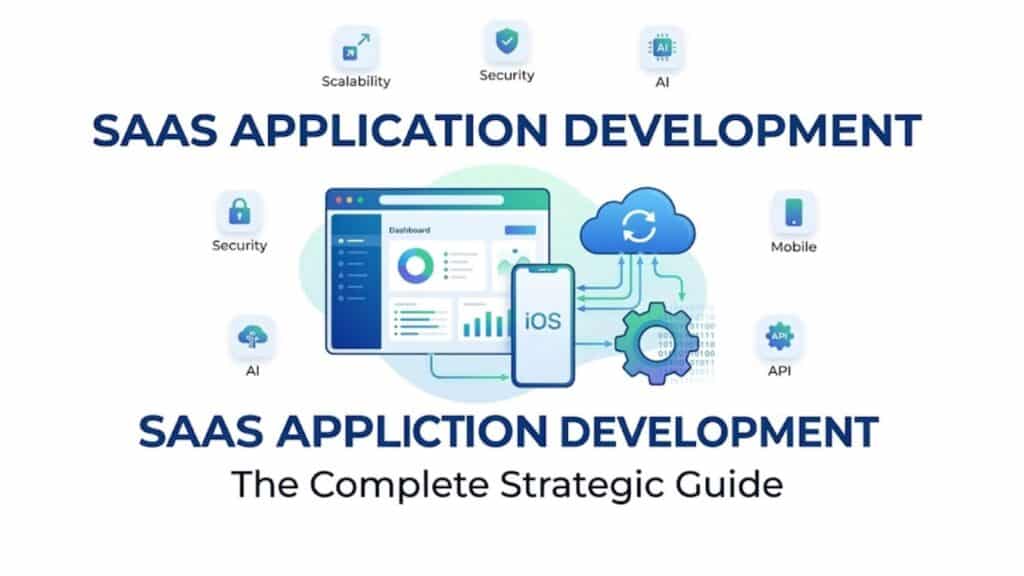
SaaS Application Development Services: Complete Guide

The shift from traditional software to Software-as-a-Service (SaaS) isn’t just a trend; it is the fundamental way modern business operates. Whether you are a founder in San Francisco, a CTO in London, or an enterprise lead in Bangalore, the goal remains the same: building a product that is resilient, multi-tenant, and capable of generating recurring revenue without breaking under the weight of its own growth. However, the “build it and they will come” mentality is a relic of the past. Today’s market is crowded. To stand out, your SaaS needs more than just functionality—it requires a sophisticated balance of cloud-native architecture, seamless UX, and a security posture that earns immediate trust. In this guide, we’ll move past the surface-level definitions and dive into the strategic realities of SaaS application development services, exploring how to build platforms that don’t just exist, but dominate. 1. Moving Beyond the MVP: Why SaaS Architecture is Different When building a standard web application development service, you might focus on a single user base. With SaaS, you are building for “tenants.” This means your architecture must handle multiple organizations using the same infrastructure while keeping their data strictly isolated. A common mistake is choosing between single-tenancy and multi-tenancy too late in the game. For enterprise-grade SaaS, multi-tenancy is the gold standard for cost-efficiency and updates. However, if you are targeting highly regulated industries like FinTech or Healthcare in the UK or US, a hybrid approach—where certain database layers remain isolated—might be your biggest selling point. 2. The Synergy of Web and Mobile: Creating a Unified Ecosystem A SaaS product today is rarely “web-only.” Your users expect to check dashboards on their laptops and receive push notifications on their phones. This is where business mobile app development becomes a core part of your SaaS strategy, rather than an afterthought. For instance, if you’re building a CRM SaaS, the web version handles heavy data entry and reporting. However, the iOS mobile application development services you employ must focus on high-velocity tasks: quick lookups, biometric logins, and offline data syncing. The key is “feature parity” where it matters, and “contextual design” where the device dictates the experience. 3. Selecting a Tech Stack That Doesn’t Create Technical Debt Your choice of tech stack is a 5-year decision, not a 5-month one. While Python and Node.js remain favorites for their rapid development capabilities and vast libraries, the “best” stack depends on your long-term scaling goals. Frontend: React.js or Vue.js for high-performance, reactive interfaces. Backend: Node.js for real-time applications (like collaboration tools) or Python (Django/FastAPI) if you plan to integrate heavy AI/ML modules. Database: PostgreSQL is a reliable workhorse for relational data, while NoSQL options like MongoDB handle unstructured data better. Infrastructure: AWS, Azure, or Google Cloud. The choice often comes down to where your internal team has the most expertise and which provider offers the best regional compliance (such as GDPR for UK users). 4. Security as a Feature, Not a Checklist For a professional app development company, security is baked into the first line of code. In the SaaS world, a single data breach doesn’t just lose you one client; it can kill your entire reputation. Implement Zero Trust Architecture. This means never assuming a user is safe just because they are logged in. Use Multi-Factor Authentication (MFA), end-to-end encryption, and regular penetration testing. If you are targeting the US market, SOC2 compliance is practically a prerequisite for selling to mid-market and enterprise companies. In India, data localization laws are becoming increasingly stringent, requiring a SaaS partner who understands where and how data is stored. 5. The Role of AI in Modern SaaS Evolution We are seeing a massive shift toward “Intelligent SaaS.” It’s no longer enough to just store data; your platform must provide insights. Integrating AI software development into your SaaS allows for predictive analytics, automated customer support, and personalized user journeys. Imagine a project management SaaS that doesn’t just show a Gantt chart but uses machine learning to predict which tasks are likely to be delayed based on historical team performance. That is the kind of value-add that justifies a premium subscription price. 6. Navigating the Challenges of Third-Party Integrations Modern SaaS lives in an ecosystem. Your product needs to talk to Slack, Salesforce, QuickBooks, and Zapier. The challenge? API maintenance. Every time an external platform updates its API, your integration risks breaking. A sophisticated development approach involves building an “Integration Layer” or using middleware that decouples your core logic from these external dependencies. This ensures that even if a third-party tool goes down, your core SaaS remains functional. 7. Global Deployment: Latency and Localization If you are a UK-based startup looking to scale into India or the US, latency is your enemy. Utilizing Content Delivery Networks (CDNs) and edge computing is essential. Furthermore, localization goes beyond just translating language. It involves handling different currencies, date formats, and tax regulations (like GST in India or VAT in the UK). A modular approach to your codebase allows you to “toggle” these regional settings without maintaining different versions of the software for different countries.   Real-World Scenario: From Legacy to Cloud Consider a mid-sized logistics firm using a desktop-based ERP. They struggled with fragmented data and high maintenance costs. By transitioning to a custom SaaS model, they migrated their operations to a centralized cloud platform. By integrating ios mobile application development services, they gave drivers a real-time app to update delivery statuses. The result? A 40% reduction in operational overhead and a 100% increase in data visibility for their global clients. Overcoming Common SaaS Pitfalls Challenge Strategic Solution High Churn Rates Prioritize UX/UI and implement automated onboarding sequences to ensure users find “Quick Wins.” Scaling Issues Use Microservices architecture to scale specific parts of the app independently. High Customer Acquisition Cost (CAC) Focus on “Product-Led Growth” (PLG) where the product’s ease of use encourages viral adoption. Compliance Complexity Automate compliance monitoring and use regional data centers to satisfy local laws.   Key Takeaways for Decision Makers Prioritize Multi-tenancy:

SaaS Application Development Services: Complete Guide Read More »

Healthcare Software Development

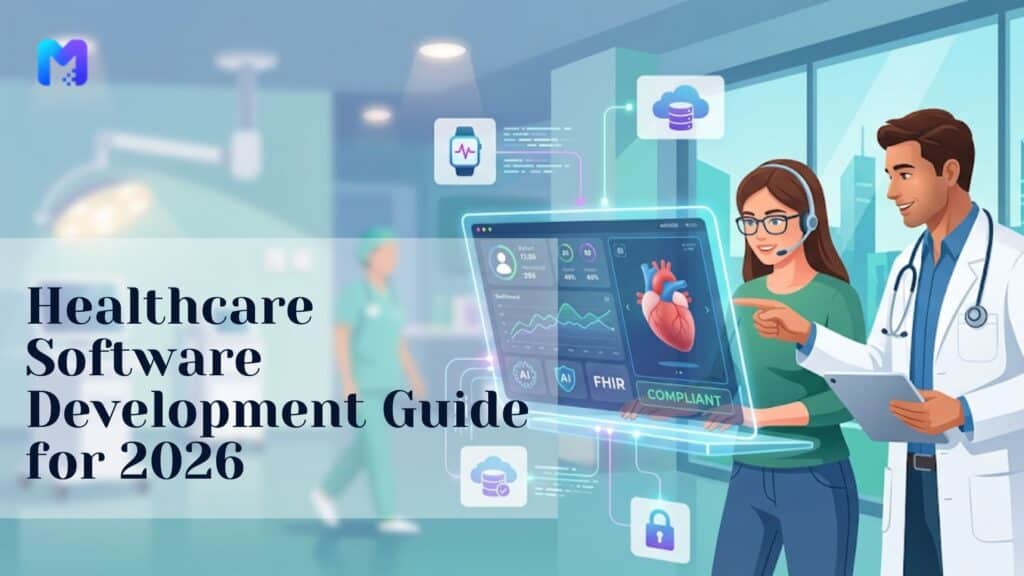
Healthcare Software Development Guide for 2026

The healthcare industry has officially moved past the “digital transition” phase. We are no longer just putting paper records into databases. In 2026, the stakes have shifted toward interoperability, predictive intelligence, and hyper-personalized patient experiences. For CTOs, hospital administrators, and health-tech founders, the challenge isn’t just finding healthcare software development services; it’s about building resilient, compliant, and scalable ecosystems that can handle the massive influx of data from wearables, genomic sequencing, and decentralized clinical trials. Whether you are looking to modernize a legacy EHR or build a disruptive patient-centric app, this guide breaks down the strategic roadmap for successful healthcare software development in the current global landscape. 1. The Shift from Reactive to Proactive: AI and Predictive Analytics In 2026, AI is no longer a “plugin”—it is the core architecture. We’ve moved beyond basic chatbots to clinical decision support systems (CDSS) that can predict patient deterioration hours before it happens. When we talk about healthcare software development, the focus has pivoted toward “Generative AI for Administration” and “Predictive AI for Clinical Outcomes.” For a developer or a business owner, this means ensuring your data pipelines are clean. AI is only as good as the data it consumes. Actionable Insight: If you’re building a SaaS platform for clinics, focus on automating the “documentation burden.” Tools that use ambient voice technology to listen to a doctor-patient consultation and automatically populate the EHR are the highest-value products right now. 2. Prioritizing Interoperability: The FHIR Standard is Non-Negotiable Data silos are the enemy of modern medicine. In the USA and UK, regulatory bodies have tightened the screws on data blocking. Your software must speak the same language as every other system in the ecosystem. Utilizing Fast Healthcare Interoperability Resources (FHIR) is no longer a “nice-to-have” feature; it is a foundational requirement. Whether you are providing website development services for a patient portal or building a complex backend for a diagnostic lab, the ability to exchange data seamlessly via APIs is what will determine your software’s longevity. 3. The Rise of IoMT and Edge Computing The “Internet of Medical Things” (IoMT) has exploded. We are seeing everything from smart inhalers to continuous glucose monitors (CGMs) that stream real-time data. The technical challenge in 2026 is managing the “noise.” You don’t need every heartbeat sent to the cloud; you need the anomalies sent to the cloud. This is where edge computing comes in. Developing software that processes data locally on the device before syncing with the central server reduces latency and significantly lowers cloud storage costs. 4. Cybersecurity: Beyond Simple Compliance HIPAA (USA), GDPR (Europe), and the Digital Personal Data Protection Act (India) are the baselines. However, in an era of sophisticated ransomware, “compliance” does not equal “security.” A senior expert approach to healthcare software development involves: Zero Trust Architecture: Never assume a user or device is safe, even inside the network. Immutable Audit Logs: Using blockchain or secure ledger technology to ensure that patient records cannot be altered without a permanent, traceable trail. Biometric Authentication: Moving away from passwords toward multi-modal biometrics for clinicians accessing sensitive data. 5. Patient-Centric Design: UX for the “Surgical” Mindset Healthcare software is notorious for being “clunky.” In 2026, the “Consumerization of Healthcare” is at its peak. Patients expect their health apps to be as intuitive as Instagram or Uber. When we provide healthcare software development services, we focus on “reducing cognitive load.” For a doctor, every extra click is a distraction from patient care. For a patient, a confusing interface leads to non-compliance. Real-world scenario: A telehealth app that requires six steps to book an appointment will see a 40% higher drop-off rate than one that uses a “one-tap” scheduling system integrated with Apple Health or Google Fit. 6. Telehealth 2.0: Virtual Wards and Remote Patient Monitoring (RPM) We have moved past simple video calls. The current trend is “Virtual Wards”—where patients who would traditionally stay in a hospital are monitored at home using high-fidelity sensors and daily virtual check-ins. Developing for virtual wards requires high-availability infrastructure. Your mobile app development strategy must include offline modes and robust synchronization logic, ensuring that if a patient’s Wi-Fi drops, their vitals are still recorded and uploaded the moment the connection returns. 7. Scaling with Microservices and Cloud-Native Architecture For enterprise decision-makers, the “Monolith” is dead. Building a massive, all-in-one healthcare platform makes it impossible to update individual features without risking the entire system. By adopting a microservices architecture, you can update your billing module without touching the patient record module. This agility is vital for staying competitive. Using cloud-native tools (AWS HealthLake, Azure for Healthcare) allows for elastic scaling, which is crucial during public health surges or rapid user growth.   Real-World Use Case: The AI-Driven Cardiology Suite Imagine a mid-sized cardiac clinic in London. They struggled with a 30% “no-show” rate and manual data entry from wearable EKGs. By partnering with the best healthcare app development company, they implemented a custom SaaS solution. The Result: An AI layer analyzed historical patient behavior to predict no-shows, automatically sending personalized SMS reminders. The app integrated directly with the patients’ Apple Watches, flagging arrhythmias to the nursing staff in real-time. The Outcome: No-shows dropped to 12%, and two life-threatening events were caught early, proving that well-architected software saves lives, not just time.   Challenges & Strategic Solutions Challenge Strategic Solution Legacy System Integration Use “Middlewares” or “Wrapper APIs” to bridge old databases with modern FHIR-compliant interfaces. Data Privacy Concerns Implement Differential Privacy—a technique that allows you to extract insights from datasets without revealing individual patient identities. High Development Costs Follow an MVP (Minimum Viable Product) approach. Build the core compliance and functionality first, then iterate based on clinician feedback.   5 Key Takeaways AI is Central: Move from descriptive analytics (what happened) to predictive analytics (what will happen). Compliance is Global: If you are building in India or the UK, keep the US HIPAA standards in mind; it makes international scaling much easier. UX Saves Lives: Prioritize “Zero-friction” design for both clinicians

Healthcare Software Development Guide for 2026 Read More »

Real Estate Website Development

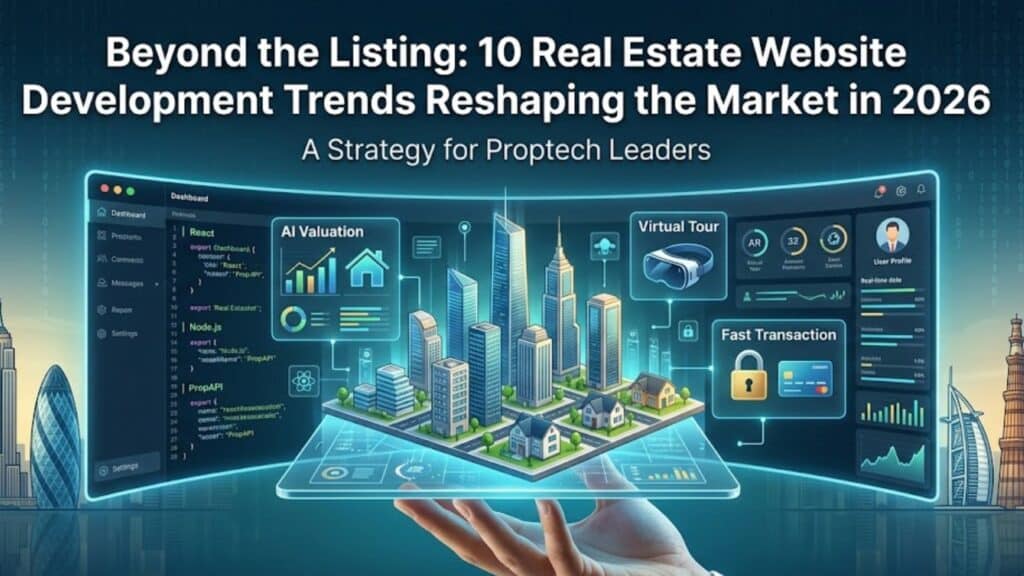
Top 10 Real Estate Website Development Trends in 2026

The real estate industry has officially moved past the “digital brochure” phase. In 2026, a website that simply lists properties and provides a contact form is no longer a tool; it’s a liability. Today’s property buyers—spanning from Gen Z first-timers in Mumbai to institutional investors in London and luxury seekers in New York—demand an ecosystem, not just a search engine. They want speed, predictive intelligence, and a seamless transition from a mobile screen to a physical walkthrough. For CTOs and founders, the challenge isn’t just website development; it’s architecting a scalable platform that integrates fintech, legal tech, and spatial computing. At Mindaptix, we’ve observed a massive shift in how high-growth firms approach their digital presence. Here is how the landscape is shifting and how you can stay ahead. 1. Hyper-Personalization via Predictive Analytics Generic “Recommended for You” sections are dead. In 2026, leading web app development services are focusing on intent-based UI. By leveraging machine learning, platforms now analyze more than just “saved searches.” They look at life events, neighborhood sentiment, and financial readiness. Imagine a user who has been browsing school ratings and proximity to parks. A sophisticated real estate portal won’t just show them three-bedroom houses; it will dynamically reorder the UI to highlight “Family-Centric Features” and provide a “Commute Cost Analysis” specific to their workplace. This level of custom web app development turns a passive browser into a high-intent lead. 2. The Rise of “Phygital” Real Estate: AR & Spatial Integration With the maturation of hardware like Apple Vision Pro and more accessible mobile AR, the “virtual tour” has evolved. We are moving away from static 360-degree photos toward interactive spatial experiences. Modern web app development agencies are now building browsers-based AR tools that allow users to virtually stage a vacant apartment with their own furniture directly through the website. For developers, this means moving toward WebGL and WebXR frameworks to ensure these heavy graphical experiences remain lightweight and responsive on mobile devices. 3. Integrated Fintech & On-Platform Transaction Management The biggest friction point in real estate is the “offline” gap—the moment a user leaves the site to talk to a bank or a lawyer. In 2026, the trend is to close that loop. Successful saas application development services are integrating mortgage pre-approval APIs, escrow management, and digital identity verification (KYC) directly into the property portal. By transforming a website into a transaction engine, you increase user retention and capture valuable data that was previously lost to third-party institutions. 4. AI-Driven Automated Valuations (AVM 2.0) Zestimates were the first generation. The next generation of valuation tools uses real-time economic data, satellite imagery (to assess roof quality or neighborhood green cover), and even hyper-local social sentiment. For a real estate web development company, the goal is to build trust through transparency. Instead of giving one “magic number,” 2026 websites provide a “Valuation Range” with clear data points explaining why a property is priced that way. This level of detail is what wins over the sophisticated modern investor. 5. Micro-Neighborhood Data & “Vibe” Mapping Data is no longer just about square footage and price. Buyers want to know the “soul” of a location. We are seeing a surge in demand for custom API integrations that pull data on: Local coffee shop ratings and “work-from-home” friendliness. Noise pollution levels at different times of the day. EV charging station density. Hyper-local crime trends vs. national averages. Developing these features requires a robust backend architecture capable of processing massive datasets without slowing down the frontend—a core focus of high-end web app development. 6. Sustainable & “Green” Property Metrics Sustainability is moving from a “nice-to-have” to a regulatory requirement in the UK and parts of the USA. Real estate platforms in 2026 are prioritizing “Carbon Footprint” scores and “Energy Efficiency” ratings. Your website should allow users to filter properties based on solar readiness, insulation quality, or LEED certification. Building these features requires a deep understanding of regional data standards, making the choice of a knowledgeable web app development agency crucial. 7. Fractional Ownership and Blockchain Ledgers The barrier to entry for real estate investment is lowering. Many startups are now requesting saas application development services that support fractional ownership. This involves creating secure dashboards where multiple investors can track their percentage of a property, receive automated rental dividends, and trade their “shares.” While the buzz around NFTs has cooled, the underlying ledger technology is being used for clean, immutable title deed records and transparent transaction histories. 8. Voice-First Search and Conversational UI In the USA and India, voice search is exploding. “Find me a 2-bedroom apartment under $3,000 near a Metro station” is a complex query for traditional search bars. Modern website development now incorporates Natural Language Processing (NLP) to handle these long-tail, conversational queries. Instead of a maze of filters, users get a chat-like interface that understands context, making the search process feel more like talking to a local expert than a database. Real-World Scenario: The “One-Click” Relocation A tech professional in London is relocated to New York. Instead of visiting ten different sites, they use a modern platform built with an integrated SaaS approach. The site recognizes their LinkedIn profile (with permission), suggests neighborhoods based on their office location, provides a virtual “staged” tour of three apartments, runs a preliminary credit check via an integrated API, and allows them to sign a digital lease—all within one web application. This isn’t science fiction; it’s the standard being built today. Overcoming Challenges in 2026 Web Development Challenge Strategic Solution Data Privacy (GDPR/CCPA) Implementing “Privacy by Design” and zero-knowledge proofs for user financial data. Platform Speed Using Edge Computing and Server-Side Rendering (SSR) to ensure heavy AR features don’t lag. Legacy Integration Building “Headless” architectures that allow modern frontends to talk to old MLS databases. Key Takeaways for Business Leaders Experience Over Information: Don’t just show data; tell a story about the lifestyle the property offers. Close the Loop: Integrate fintech and legal tools to keep the user on your platform until the

Top 10 Real Estate Website Development Trends in 2026 Read More »

website development

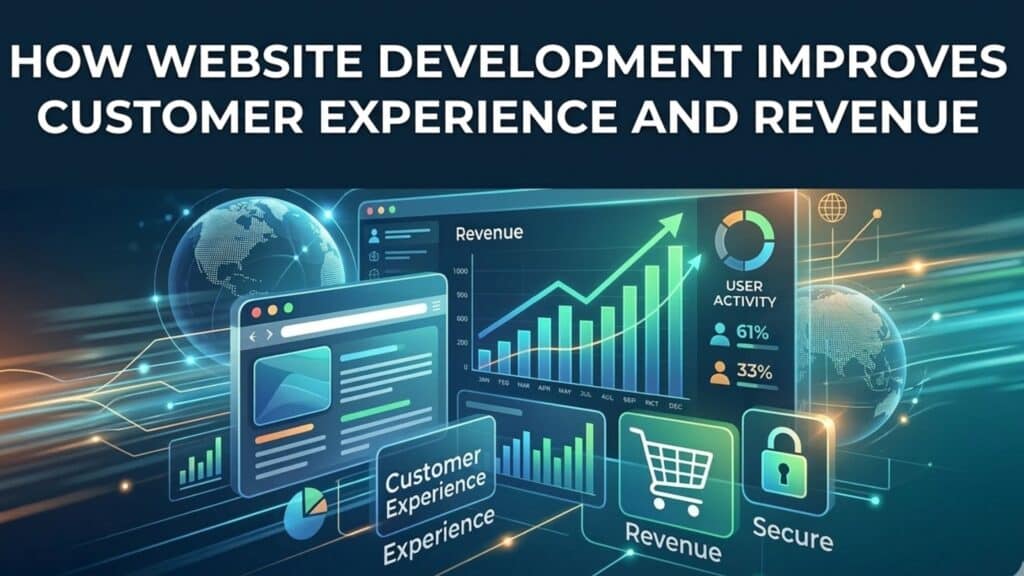
How Website Development Improves Customer Experience and Revenue

Objective The objective of this blog is to shift the reader’s mindset from seeing a website as a “digital expense” to seeing it as a high-yield financial asset. By reading this, business owners, CTOs, and founders should realize that generic, slow, or non-interactive sites are actively costing them money in lost conversions and high support overhead. The goal is to demonstrate-through real-world logic-how professional website development and custom web application development services create a seamless user experience that directly scales revenue, reduces operational friction, and builds long-term brand equity in global markets like the USA, UK, and India.   If you’re a CTO or a founder, you already know that “making a website” is the easy part. The hard part is building a digital asset that doesn’t fall over when you scale, doesn’t leak data, and actually turns a visitor into a long-term contract. In the high-stakes markets of the US, UK, and India, the gap between a generic site and high-tier website development is the difference between a business that survives on luck and one that scales on systems. At Mindaptix, we don’t just write code; we build revenue engines. Here is the reality of how technical debt in your web stack is quietly killing your customer experience (CX). 1. The Death of the “Static Brochure” If your website just tells people what you do, you’re stuck in 2015. Modern web application development services are about creating utility. Think about it: Why do users love Shopify or Notion? It’s not because they have “nice colors.” It’s because the interface allows them to achieve a goal with zero friction. When we move a client from a static site to a functional web app-where customers can manage their own subscriptions, view real-time data, or trigger workflows-the customer support tickets drop by half. That’s reclaimed revenue right there. 2. Speed: The Unseen Conversion Killer We’ve all seen the charts where a 1-second delay equals a 10% drop in sales. But here’s the expert take: Speed isn’t just about “fast servers.” It’s about clean architecture. Bloated JavaScript and unoptimized third-party scripts are the “silent taxes” on your business. Professional website development services focus on “Tree Shaking” (removing unused code) and optimizing the Critical Rendering Path. If your site feels heavy, your brand feels heavy. In a world of 5G and instant gratification, “heavy” is expensive. 3. SaaS Development: Building Your Own Moat For enterprise leaders, SaaS development services are the ultimate way to create “stickiness.” When you build a custom dashboard or an internal tool that your clients rely on daily, you aren’t just a vendor anymore; you’re an ecosystem. We recently saw a logistics firm move their manual “track and trace” system into a custom-built SaaS portal. They didn’t just save time; they turned that portal into a premium add-on. They stopped selling a service and started selling a platform. 4. The “Web-App” Hybrid (PWA Strategy) In India and parts of the UK where mobile connectivity can be spotty, website app development services that utilize Progressive Web Apps (PWAs) are game-changers. A PWA allows your site to work offline and load instantly on a second visit. It gives you the “app feel” without the “app store” friction. No one wants to download another 100MB app for a one-time purchase. By giving them an app-like experience through the browser, you remove the biggest barrier to the first sale. 5. Security as Your Best Salesperson In the US and UK, GDPR and SOC2 compliance aren’t just legal boxes to check. They are trust signals. If your site has a “sketchy” checkout flow or lacks clear data-handling transparency, high-ticket clients will bounce. Integrating software development and services with a “Security-by-Design” mindset means you can walk into a pitch and prove your platform is a fortress. That confidence is what closes enterprise deals. 6. Localized CX for Global Markets A site that works in New York might fail in Mumbai if you haven’t considered local payment gateways, regional latency, or specific UX preferences. Best website development services account for regional nuances-integrating UPI for India, specialized credit card processing for the US, and VAT compliance for the UK-all within the same codebase. A Real Scenario: The “Leaky Bucket” Fix A client came to us with high traffic but low conversions. They thought they had a marketing problem. We looked at the code and found their “Contact Us” form was firing three different tracking scripts that slowed the page to a crawl on mobile. The Fix: We rebuilt the lead-gen flow using a modern React framework. The Result: Page load went from 6 seconds to 1.2 seconds. Leads doubled overnight without spending a single extra dollar on ads. 5 Non-Negotiable Takeaways Utility > Information: Give the user a tool to solve their problem, not just a page to read.  Architecture is Marketing: A slow site makes a great product look cheap.  SaaS = Retention: Custom portals turn one-off customers into lifelong users.  Security is a Feature: Use your data protection as a competitive advantage.  Build for the Edge: Ensure your site is as fast in London as it is in Delhi. FAQ: The Questions We Actually Get Asked 1. Why shouldn’t I just use a cheap template? Templates are like generic suits; they “fit” everyone but look good on no one. They come with “bloat” (code you don’t need) that slows you down and makes SEO a nightmare.   2. How do web application services differ from basic web design? Design is how it looks; development is how it works. A web application handles logic-it processes data, talks to your CRM, and performs tasks.   3. Is mobile-first still the priority? Yes, but with a twist. It’s now about “Mobile-Fluent” design-ensuring the thumb-reach and navigation are as natural as a native iPhone app.   4. How does custom software help my ROI? By automating manual tasks. If a custom web tool saves your team 10 hours a week, the software pays for itself in months.   5.

How Website Development Improves Customer Experience and Revenue Read More »

website development cost

Website Development Cost Guide for Businesses in 2026

Introduction For most modern businesses, the website is no longer just a marketing asset-it is often the core digital infrastructure of the company. It generates leads, supports sales, integrates with internal systems, and sometimes even acts as the product itself. Yet one question continues to dominate conversations with founders, CTOs, and enterprise leaders: “What is the real Website Development Cost?” The answer varies widely. A simple business website might cost a few thousand dollars, while enterprise platforms or SaaS-based web products can reach six-figure investments depending on architecture, integrations, and scale. Understanding cost is not just about budgeting. It’s about making strategic decisions-choosing the right architecture, development partner, and technology stack so the platform can grow with the business. This guide explains what drives website development costs in 2026, how businesses typically invest in digital platforms, and how decision-makers can avoid expensive mistakes. Why Website Development Matters for Business Growth Just as companies once invested in physical storefronts, today they invest in digital platforms. Customers research businesses online before making decisions, compare competitors, and evaluate credibility through websites. A strong website delivers several strategic advantages: Increased brand credibility Higher lead generation and conversions Better user experience for customers Integration with marketing, analytics, and CRM systems Scalable digital infrastructure for business growth Businesses that ignore this often struggle to compete. In many industries, the website is the first interaction a customer has with a brand, making performance, design, and functionality critical. Key Factors That Influence Website Development Cost Website development costs are determined by several technical and strategic factors. Understanding these helps businesses plan budgets realistically. 1. Type of Website The biggest cost driver is the type of website being built. Basic business website These typically include: Home page About page Services pages Contact form Basic CMS Estimated cost: $3,000 – $10,000 Corporate website These include more advanced features: Custom UI/UX design SEO optimization blog system integrations with CRM tools Estimated cost: $10,000 – $40,000 Web application or SaaS platform These are much more complex and often require: user authentication dashboards APIs automation cloud infrastructure Estimated cost: $40,000 – $200,000+ Custom web applications require deeper engineering and often involve web application development services instead of simple website builds. Design and User Experience Costs Many businesses underestimate how important UX design is to website success. A well-designed interface improves: engagement conversions user retention brand perception Professional UX design usually includes: user research wireframes prototypes mobile optimization accessibility improvements Template websites are cheaper, but custom design often delivers better results for businesses aiming to scale. Industry developers frequently emphasize that custom design and UX work can significantly increase development costs, but it also improves conversions and user engagement. For companies competing in crowded industries, investing in UX design often produces a higher ROI than cutting costs in the design phase. Technology Stack and Development Complexity The technologies used to build the platform also affect cost. Modern web platforms often include: Frontend technologies React Next.js Vue Backend technologies Node.js Python .NET Infrastructure AWS Google Cloud Azure For simple websites, CMS platforms like WordPress or website builders may be enough. However, enterprise systems require custom architectures capable of handling large amounts of traffic and data. Custom-coded websites can cost $5,000 to $30,000 or more depending on complexity, with additional hosting and maintenance expenses. Organizations seeking scalability usually invest in custom architecture built by experienced teams or the best app development company with expertise in enterprise platforms. Integrations and Features That Increase Costs Modern websites rarely operate independently. They integrate with multiple tools such as: CRM platforms payment gateways marketing automation tools analytics dashboards inventory systems ERP software Each integration adds development time and complexity. For example: An eCommerce website may require payment gateway integration shipping management tax calculation systems inventory tracking Similarly, SaaS companies require subscription billing systems role-based user access real-time dashboards This is why feature requirements often determine the final Website Development Cost more than page count. Real-World Business Use Cases Understanding real scenarios helps explain why website costs vary. Case Study 1: Startup SaaS Platform A fintech startup required: landing pages product dashboard payment gateway integration customer onboarding system Estimated development investment: $50,000+ The platform became the company’s primary product interface. Case Study 2: Corporate Website Transformation A logistics company replaced its outdated website with a platform integrating: shipment tracking CRM systems automated lead generation tools Estimated cost: $35,000 The upgrade increased inbound leads and improved customer communication. Case Study 3: Healthcare Technology Portal A healthcare organization required: secure patient dashboards encrypted data storage compliance with healthcare regulations Estimated investment: $120,000+ Projects like this often combine Website Development Services with enterprise software development expertise. Ongoing Website Costs Businesses Should Plan For Launching a website is only the beginning. Ongoing costs are essential for maintaining performance and security. Typical recurring expenses include: Hosting and infrastructure Shared hosting may cost a few dollars monthly, while enterprise cloud infrastructure can cost thousands annually depending on traffic and storage. Security updates Regular security patches and monitoring protect websites from cyber threats. Maintenance Bug fixes, system updates, and feature improvements are ongoing tasks. Content and SEO Content marketing and SEO are essential for driving traffic and maintaining search visibility. Businesses usually allocate 15–25% of the original development cost annually for maintenance and improvements. Common Website Development Challenges Even experienced organizations encounter challenges during development. 1. Poor project planning Businesses often start development without clearly defining goals. Solution: Conduct discovery sessions and technical planning before development begins. 2. Choosing the cheapest vendor Low-cost development may lead to: poor code quality security vulnerabilities scalability issues Solution: Work with experienced teams offering professional Website Development Services. 3. Ignoring scalability Many companies build websites for current needs rather than future growth. Solution: Use scalable cloud infrastructure and modular architecture. 4. Lack of long-term strategy A website should evolve alongside the business. Solution: Choose development partners that offer long-term product development expertise. How to Choose the Right Development Partner Selecting the right development team significantly impacts project success. Businesses should evaluate

Website Development Cost Guide for Businesses in 2026 Read More »

App Features

Top App Features That Improve Retention & Engagement

Getting users to download your app is expensive. Keeping them is where the real battle begins. Most businesses focus heavily on acquisition – ad spend, ASO, influencer campaigns – but retention quietly determines profitability. If users drop off after the first week, growth stalls no matter how strong your marketing is. After working with startups, enterprises, and global product teams across the US, UK, and India, one pattern is clear: retention is not driven by “more features.” It’s driven by the right features – implemented strategically. Whether you’re partnering with one of the best app development companies or scaling internally with a mobile app development company, understanding what truly keeps users engaged can transform your growth curve. Let’s break down the app features that consistently improve retention – and why they work. 1. Intelligent Onboarding That Reduces Friction Retention starts in the first five minutes. If users feel confused, overwhelmed, or forced to complete long forms, they leave. Strong onboarding reduces time-to-value. What Works Progressive onboarding (step-by-step guidance) Contextual tooltips instead of long tutorials Social or single-tap login Personalized setup questions Real-World Scenario A fintech startup we advised reduced drop-offs by redesigning onboarding into three lightweight screens. Instead of asking for full KYC details upfront, they allowed users to explore basic features first. Result? Higher activation rates and stronger day-7 retention. An experienced iOS mobile app development company understands how to design native onboarding experiences that feel intuitive rather than instructional. 2. Personalization That Feels Useful, Not Intrusive Users stay where they feel understood. Personalization goes beyond addressing someone by their first name. It’s about tailoring content, notifications, and experiences based on behavior. Practical Examples Ecommerce apps recommending products based on browsing history Fitness apps adjusting workouts based on performance Healthcare apps tracking symptoms and offering contextual suggestions In healthcare app development, personalization must balance engagement with privacy. A symptom-tracking app that adapts recommendations based on logged data increases trust – but only if data security is airtight. The key insight? Personalization must solve a problem. If it feels random, users ignore it. 3. Smart Push Notifications (Not Notification Spam) Push notifications are powerful – and dangerous. Too many, and users disable them. Too few, and engagement drops. Retention improves when notifications are: Behavior-triggered Time-zone optimized Value-driven For example: “Your weekly health report is ready.” “Items in your cart are low in stock.” “You’re close to completing your savings goal.” One retail client improved re-engagement by replacing promotional pushes with personalized restock alerts. Click-through rates improved because the message mattered. The best app development companies treat notifications as part of a long-term retention strategy – not a marketing megaphone. 4. Seamless Performance & Speed Optimization Nothing destroys retention faster than lag. It doesn’t matter how visually stunning your app is. If it crashes, freezes, or drains battery, users leave. Performance optimization includes: Efficient API architecture Optimized media loading Lightweight backend calls Offline capabilities where relevant A global travel app struggled with slow loading times in regions with weaker internet infrastructure. After optimizing backend response times and implementing caching, session duration improved significantly. This is where partnering with a technically mature mobile app development company becomes critical. Performance is architecture-driven, not cosmetic. 5. In-App Community & Social Proof Humans stay where other humans are active. Community-driven features increase emotional attachment: User forums Comment sections Peer challenges Social sharing integrations For SaaS platforms, simple engagement features like collaborative dashboards or shared workspaces increase stickiness. A project management app integrated team performance insights and shared milestone celebrations. Teams began logging in daily – not because they had to, but because visibility mattered. Retention grows when the app becomes part of users’ routines. 6. Gamification That Encourages Habit Formation Gamification works – but only when aligned with user goals. Examples: Progress bars Achievement badges Reward tiers Daily streak tracking Fitness and language-learning apps are classic examples. But gamification isn’t limited to consumer apps. In healthcare app development, medication adherence apps use streak systems to encourage consistency. In enterprise SaaS, employee training platforms reward module completion. The psychology is simple: visible progress increases motivation. 7. Continuous Value Through Data Insights Apps that generate insights outperform apps that simply store data. Users stay when they receive feedback. Examples: Weekly spending analysis Health improvement trends Productivity summaries Sales performance breakdowns In enterprise apps, analytics dashboards often drive daily engagement. When executives see actionable insights, logging in becomes necessary. This is where AI-backed analytics integrated during development by top-tier teams – often among the best app development companies – create long-term differentiation. 8. Seamless Cross-Platform Experience Retention improves when users can switch devices without friction. Start on mobile, continue on web Real-time sync Consistent UI patterns Secure cloud storage Many businesses underestimate how important cross-platform continuity is. For example, a B2B SaaS client saw increased engagement after launching a lightweight web dashboard that complemented their mobile app. Users could monitor activity from their desktop during work hours and use mobile on the go. A capable mobile app development company ensures architecture supports scalability beyond one device. Mini Case Study: Healthcare App Retention Strategy A healthcare startup building a chronic condition management app struggled with 30-day retention. The issue wasn’t feature quantity. It was value clarity. The solution included: Simplified onboarding AI-driven symptom pattern recognition Weekly progress insights Medication reminders with adaptive scheduling Doctor communication integration Within months, active usage increased because the app became part of patients’ daily routines. Healthcare app development requires a delicate balance between usability, compliance (HIPAA/GDPR), and emotional trust. Retention depends on credibility as much as functionality. Strategic Insights for Decision-Makers If you’re a CTO or founder evaluating retention improvements, consider these realities: Retention is cheaper than acquisition. Feature decisions should be data-backed, not trend-driven. Engagement loops must align with business objectives. Architecture scalability determines long-term performance. Building retention features isn’t about copying competitors. It’s about understanding user behavior and building around it. Common Retention Challenges (And Practical Solutions) Challenge 1: Feature Overload Too many features confuse users. Solution: Prioritize clarity. Remove or

Top App Features That Improve Retention & Engagement Read More »